

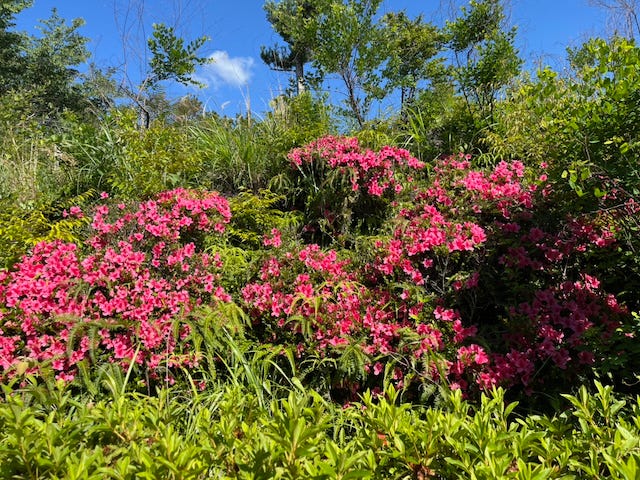
When the Satsuki Bloom
Reflections on the kindness of strangers and lessons from a compassionate woman with a healing touch

One year, just around this season, I had a car accident. The details are simple: I was driving my car, stopped at a red light. My car was hit by the vehicle behind me.
The man who bumped my car, appeared on the verge of panic as he leaped out of his van, looking like he was prepared to administer first aid, which I did not need.
I assured him that I was fine and that he needn’t worry. We exchanged telephone numbers and insurance data, and in my newly dented car, I continued on my way,
Returning home, I could hear the telephone ringing as I came in the door. It was the man, his voice almost hysterical with worry. He told me he’d been trying to reach me for over an hour. How was I? Had I gone to the hospital?
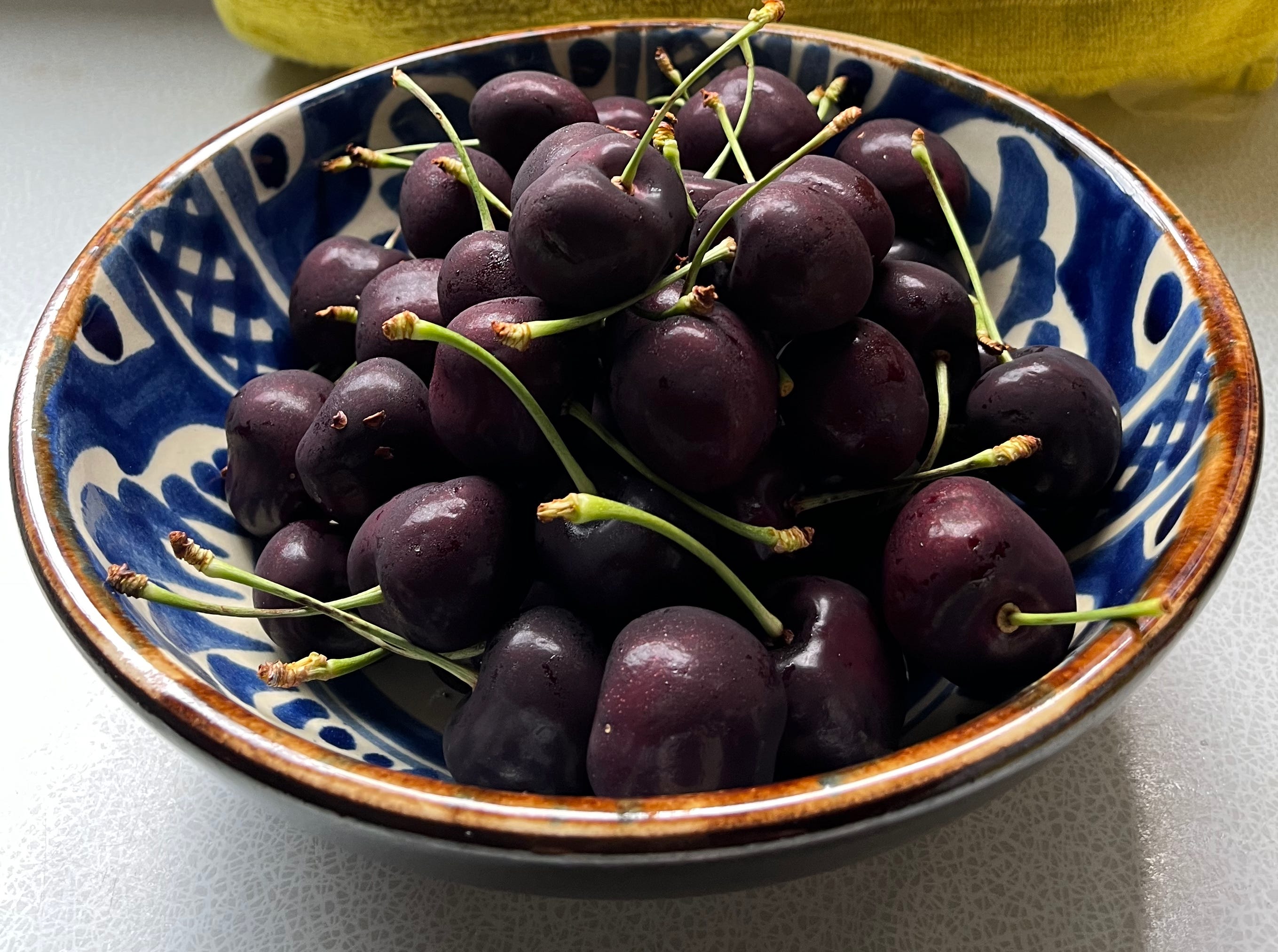
To say he was remorseful would not convey his feelings. Solicitous in the extreme, his concern for my wellbeing was stated in the most apologetic, formal and courteous Japanese, the tone of his language tinged with that of an anxious and worried parent. (The following day he showed up at my door with a gift of black cherries — my favorite fruit. How did he know?!)
Well, what I thought was nothing turned out to be a year of physical therapy for acute lumbar strain. At one point, I urged the orthopedic doctor (our sons were classmates) I was seeing to tell me the truth: I’d never be able to walk or even stand very long again without pain. I told him I was sure he was saving the worst news for last, and that I already knew he’d soon announce I would never dance again.
He told me to quit the dramatics and to do what he’d been telling me to do: stretch the lower part of my back after a bath, daily. I began to do this and my back began to get better.
He also recommended massage, and gave me the name of a woman in the neighborhood. A retired nurse, she not only helped diminish pain, she gave me information about my body that I feel should have come with me in a manual when I was born.
I continued to go to her regularly long after my back healed, and I listened attentively to what she told me about my overall condition. I was convinced she had good advice about everything from an upset stomach to a weary soul.
She is single, and told me she has never married because when she was a young woman she fell in love with a married man. She knew he would never leave his wife, and she didn’t want him to. But she loved him passionately and believed she could never have those feelings for another man.
On one occasion when I went to see her, she was greatly annoyed, and told me “otaku no kata” had come and had a massage. Since that term can be translated to mean “someone in your family”, I thought to myself, oh, Billy (my husband) finally went to her, as I’d advised him to do many times. But what in the world could he have done, I wondered, to have disturbed her so?
It turned out that the person she referred to was an Asian man. To my massage therapist, as a foreigner, he and I were related.
The man had a massage, and when she was finished, handed her an amount of money that was half the cost of the massage. “What’s this? When you called and asked for an appointment, I told you what it cost.”
He told her it was all he had. She said he stretched like a “contented cat” as he left, saying: “Ah, that was good! I feel a lot better!”
“You know what made me so angry? He never even said thank you.”
The massage therapist keeps the television on in her small house all the time — “It keeps me company” — she almost appears to be a guest on the many daytime programs she watches. And she knows every bit of news. One time she told me, and in a tone one would use to address the person who’s responsible for government policy:
“Tell me why America is running around all over the place telling this and that country what to do when they had just better make themselves a country without guns and all that trouble they have? I couldn’t even believe it, but there was a program showing an old woman my age who was worried her medical insurance wouldn’t cover her bills. Now what would I do without my health insurance? It’s a mess over there.”
She has said she knows she consumes too much news, and often finds herself waking in the night worrying about people she doesn’t know. Concerned about their predicaments and suffering, she can lie awake for hours thinking about them.
I don’t think I over-consume the news, but I, too, find myself sometimes wondering, if not worrying, about the people in heartbreaking stories that leave me heartbroken.
Still, a daily barrage of grim statistics of people killed in wars, victims of crimes, calamities, and natural disasters that swallow up whole communities, can have the negative effect of eroding our natural feelings of compassion.
I think I understand my massage therapist. Living in Japan, a small, cramped country with a large population (122 million), it’s easy for bad news to feel personal. Tragic news that might not even be reported in some places often here appears on the front page. It makes it possible to read the headlines, be overwhelmed with pity, and cry.
And I hope it's evident that the customer was not American. In my essay I mention he was "Asian" as my therapist broadly described him. (I got the impression he might have been Malaysian, Indonesian or Thai.) Sorry you were "infuriated" -- but no need in this case ... be well!
Your beautiful words make me miss Japan so much!! Do you still stretch after the bath? I find walking helps keep my back somewhat okay--like when I don't walk after a few days I start feeling twinges, mainly in my upper back!