
The Company We Keep
On choosing solitude, then choosing companionship, across five decades in Japan

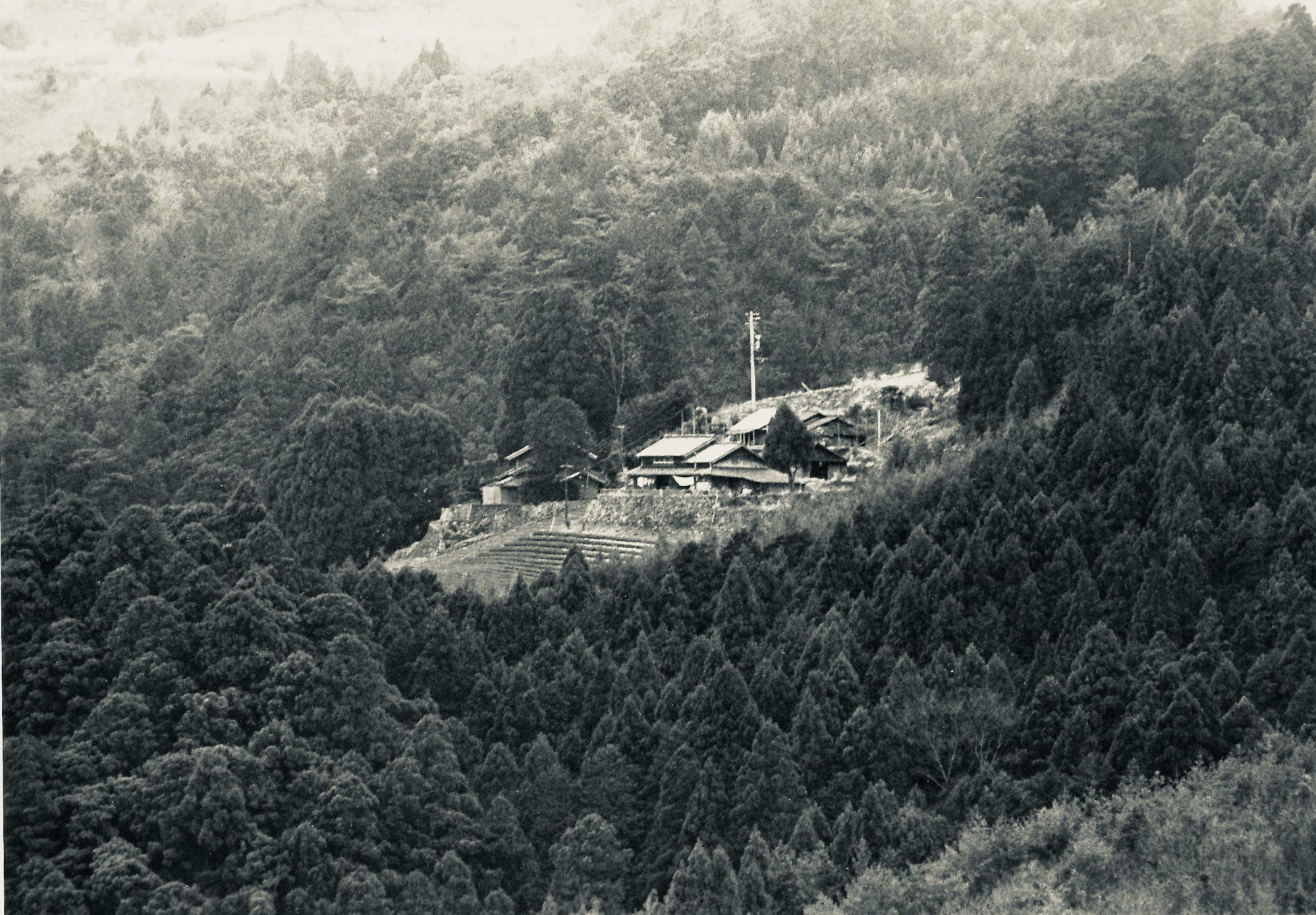
This isolated place is where I lived for seven years — and which gave its name, much later, to my memoir, The View From Breast Pocket Mountain.
The address: 147 Takenotaira 竹の平 (Bamboo Plateau), Futokoroyama 懐山 (Breast Pocket Mountain), Tenryu 天龍 (Heaven’s Dragon).
A hamlet, our family was one of just four households. One family also had an elementary-age child, and the mother and I took turns driving our daughters down the hill in the mornings to the school bus. Their walk home uphill took an hour.
Regular socializing was not part of daily life at Futokoroyama, and on most days I did not interact with anyone other than my family members, which then consisted of my husband Billy and daughter Nanao.
Even if there had been ladies tea parties to which I’d been invited, the ladies and I did not share a language. At the time, my rudimentary Japanese made carrying on a conversation a struggle. Still, I could say I was positively fluent in comparison to my neighbors who did not have a word of English between them.
But they weren’t unfriendly. They were farmers. Their days were spent in the fields. I’d bet that even the thought of sitting around a table sipping tea and talking about books had never occurred to them.
I’m a highly social person, and the wonder is that I chose to live in such a remote place, for such a long time. And yes, the emphasis is on choice. Because when I decided that I no longer wanted to live an isolated life, that I longed for companionship, I told Billy, and we moved.
I have written about the special rigors of living in an old farmhouse. No running hot water meant building a fire every night to heat the ofuro, bath. There was nothing that could be called a convenience, like a toilet that flushed. I wasn’t miserable nor had I romanticized country life, I’d just gotten used to it.
And then, I put it all behind me when we moved to the city of Hamamatsu.
The best part of moving to the city was having the possibility of regularly meeting and talking with other foreigners. At the time, 1983, there weren’t many foreigners living in Hamamatsu (pop. 500,000). Of the ones who were there, I knew, or would eventually meet, most of them. And I enjoyed meeting people with whom I shared a common cultural background, and familiar points of reference.
But there was a drawback: these foreigners never represented what I could think of as a community. It was a transient group, and trying to build lasting friendships could be frustrating. I became cautious, shying away from those foreigners, women and men, who I knew were only in Japan for a limited time, and who would be leaving, eventually. Aside from it being tiresome having to constantly repeat one’s life story, I found it emotionally draining always having to say goodbye.
And to underline my point, none of the foreigners I knew then are living in Japan now. Sadly, some have passed away. I now know two American women in Hamamatsu, though I seldom see them.
In those early days, some women I knew would meet in each other’s homes and spend long afternoons together. Our group, mostly mothers, was a mix. I recall a few, from Denmark, Finland, England, the Philippines, Sri Lanka. Of the Americans, they came from states I’d never been to—Indiana, Alabama, Kansas, Nebraska.
During our time together, the room would positively hum as women almost desperate to speak their own language talked without taking a breath. Time would fly and conversation never stopped as we recommended dentists, pediatricians, travel agents. We traded magazines, lent and borrowed books, exchanged recipes, gave away children’s clothes, and offered information on immigration laws.
Experiences of pregnancy and childbirth were shared, along with the nuts and raisins we ordered in bulk. At a time when unprocessed cheese was not readily available in supermarkets, we’d divide a huge wheel of Gouda bought from a wholesaler friend of Billy’s. (I’d pick up the cheese at this friend’s parents’ fish store on the outskirts of Hamamatsu.)
Sometimes we talked about our children born in Japan, and how they viewed their foreign mothers. Solveig, tall and blond, told us her son said he was embarrassed when she came to meetings at school because she stood out among Japanese mothers like a “yellow mountain.” I could report my daughter Mie didn’t shy away from using dark brown paint and crayons to color me in her drawings — forgoing the hadairo (“skin color”) all her Japanese kindergarten classmates used to color their mothers.
The days of isolation in a remote hamlet are long behind me. After five decades in Japan, I believe I can describe myself as seasoned. I long ago accepted and adapted to this society and culture. The friends I have, mostly Japanese, I’ve had for a long, long time. We represent a small community — one with stories and shared memories.


“Let’s get together,” I’ll say, and I mean it. I do not deny myself the special pleasure of inviting friends, with their hearty appetites, to my table. Enjoying a meal together is of course enjoyable, but it’s the conversation, the laughter, the pure and deep joy of being in the company of old friends that everyone appreciates.
And I’m always happy to make new friends.
Thank you for reading! Share 📣 Like 🩷 Leave a comment 💬
NOTE: Started a year ago, this is my 44th post. The Substack stats tell me my essays have received almost 30,000 views. My 474 Subscribers come from 34 states and 25 countries. My many thanks to my 30 paid subscribers. To all who find value in my writing and would like to join that elite group, I welcome you!
Every word you publish is just so good. I have felt similarly in raising my kids as a non-Japanese woman, but I can imagine all of this so much more acutely if it were outside of Tokyo, outside of the influx of foreigners HERE, even in the last 5 years. So much was different 15 years ago, let alone, decades. You have indeed earned the word, "seasoned", but also, "beautifully" or perhaps "heroically seasoned."
Such a nostalgic piece of writing, certainly for me. You’ve reminded me how much I miss being in Japan, speaking Japanese and seeing you and Billy more often. And sitting around that table for your yummy cooking! Thanks for this - it really brightened my day. 😘❤️🇯🇵